February 22, 2012

Healthy

Food Allergies & Living With Energy

If you are finding yourself extremely low energy and perhaps having physical pain or joint achiness don’t assume that you have arthritis, chronic fatigue, are just getting old, or some other malady that your doctor may be quick to label and give you a pill for.
You may have severe food allergies.

There are 7 main substances that people are finding themselves severely allergic to.

The are as follows.

  • Nuts
  • Seafood
  • Dairy
  • Wheat
  • Sugar
  • Corn
  • Soy Prodcuts

Reactions to these can be severe.

Nuts can cause immediate death.
Seafood can be similarily severe although not so quickly.
Most people with seafood allergy just get sick.

The other 5 can cause varying degrees of reaction.
Some of which are,
extreme bloating & distension
severe gas
fiery and explosive bowel movements or diaheara
muscle aches and crampiness
pain in the abdomen
mentally fuzziness and fogginess
Living like you have a bag over your head.

If you eat any of the above which we all do, start a food diary and discover what you are eating and drinking daily. Take a look at what is in these items. Try eliminating one at a time for 2-3 weeks and see what happens. You may find some improvement but not enough. This could mean you are allergic to more than one. I personally can’t eat 4 of the items on the above list. It can be a big challenge at first to eliminate for instance wheat and dairy from your diet as they are everyhwere in our society. However, if you get your life back, are in control and feeling great it will be worth the effort.

You can go to http://www.riseandshine.com/health/living-without-gluten/ to read more on this topic.

Popularity: 4% [?]

Living Without Gluten

Gluten is a naturally occuring substance that is part and parcel of wheat, rye, barley and also on a smaller scale in many other grains that are commonly used for breads and baking. Gluten is very difficult for the human body to digest, it is not natural and easy. As a result many people become gluten intolerant. This can occur at a young age or over a lifetime. As we get older the digestive system and body in general is less strong so intolerance tends to build up.

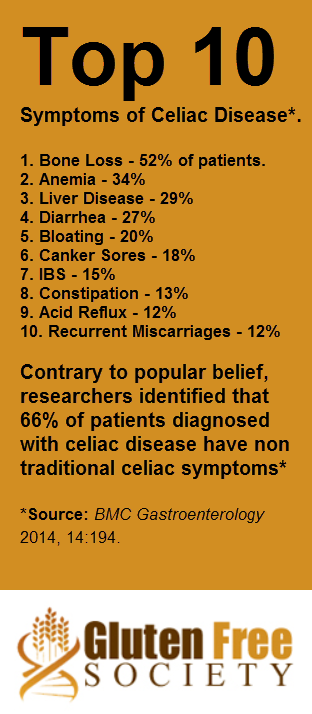
A person who is totally gluten intolerant is generally called a Celiac. Celiac disease is an auto-immune disorder. Auto-immune means that we ingest certain substances, in this case gluten the body attacks itself. As a celiac the body is attacking the small intestine and will ultimately destroy it if we don’t take action to avoid this. The only real action to take is to avoid gluten.

Gluten is a glue like substance. It is used in most produced products in boxes, cans and jars. You have to check the labels on everything you buy to see if it says gluten or wheat. Some products have such low levels of gluten added to them they don’t declare it. However, if you are a celiac even the smallest amount is too much.
Gluten is used in all salad dressings (unless they say gluten free). I discovered when buying orange popsicles for the kids that they are held together with guess what…. our friend gluten. So you have to develop your eagle eye to seek out the evil gluten that will make you sick.

The solution is to start eating freshly grown, preferably local produce at home. Eating in restaurants can be quite challenging and it is best to try out some of the better restaurants where you may find a knowledgable chef that can accomodate you.

The average celiac takes 7 years to get a diagnosis. This is because the medical profession is not properly trained in nutrition. Besides they can’t operate to fix it, you have to with your diet. So this leaves it of little interest to them. Personally I spent almost 20 years going to doctors several times per year complaining of the same issues over and over again. Not one could be bothered to take 15-20 minutes to look at my list of complaints & the list of common digestive disorders to see what the issue might be.

If you are a celiac I have found one useful online resource is to sign up on twitter with gluten free or celiac in your name. The other celiacs will come and find you and you can learn from their blogs, plus discover where great bread and baking type products are located. Today it is considered that about 1 out of every 130 people on the planet is in fact a celiac.

You can find me at http://twitter.com/glutenceliac.
To read more on this topic you can go to

Popularity: 6% [?]

When To Get Medical Attention

The Mayo Clinic has developed a list of symptons of serious conditions that should not be ignored.

A list of 10 Health Signs that Should Not Be Ignored

1/ Shortness of breath – If your having trouble catching your breath, gasping or wheezing, and you haven’t been doing any strenuous exercise it’s time to see a doctor.
Breathing difficulties could be caused by asthma, heart problems, anxiety & panic attacks, blood clots, pneumonia and other serious conditions.

2/ Flashes of light- can be a signal of retinal detachment and could cause you to lose your vision sometimes within hours. Those little flashes may not be floaters.
This sudden onset of sensation may signal your retina is detaching. You may need immediate care to save your eye.

3/ Unexpected Weight Loss – The body doesn’t lose weight unless it is provoked, either by a reduction of calories, exercise or a medical ailment. If you have lost 5% of your body weight or more in a month or more than 10% over six – 12 months then it is time to check if something else is going on. Stomach cancer or hypothyroidism (overactive thyroid)are possilibilites. Also liver disease or disorders that interfere with the body’s ability to absorb nutrients from food can be responsible.

4/ Persistent fever – Often a sign the body is fighting a bug. Could be urinary tract infection for example. Persistent low grade fever can be cause by certain types of cancer even tuberculosis. Drug reactions can cause fevers. If you have a low grade fever lasting for more than 2 weeks, see a doctor.

5/ Unexplained Bowel Habit Changes. Bowel habits alter with diet, age and travel. There are certain changes that can signal other issues. The Mayo Clinic suggests that if you have severe diarrhea lasting more than 2 days, mild diarrhea lasting more than a week, or constipation lasting over 2 weeks or consistent unexplained bowel urges to get checked out. Bloody diarrhea, black or tar-coloured stool should also be brought to a doctor’s attention.

Causes can be infection, bacteria viruses or colon cancer.

6/ Changes in mental status. If your mental acuity or behavior shifts such as you become confused in your thinking, disorientated, hallucinate or your behavior changes to unusually aggressive then it is time to check with your doctor.
These can be cause by stroke head injury, infection , low blood sugar or reactions to medication

7/ Severe Headaches or New headaches especially in anyone over the age of 50.
Most migraine sufferers or people with tension headaches develop them earlier in life. So new types of headache particularly after age 50 should be taken seriously Dr. Hanson of the Mayo says.

Sudden sever headaches or those accompanied by fever, stiff neck rash, mental confusion, seizure, weakness, numbness or speech problems could be signs of a stroke, meningitis an aneurysm, bleeding on the brain after head trauma or blood vessel inflammation.

Don’t use a wait and see approach on these. With a head and brain issue appropriate drugs may need to be issued within hours in order to avoid sever damage.

8/ Short term loss of Vision, Movement or Speech Control
These can be signs of a stroke or transient ischemic attacks or mini-strokes. If you are having TIA’s you can be at risk of having a stroke and you need medical care.

If you develop sudden weakness or numbness of the legs, arms or face on one side, sudden dimness, blurring, loss of vision , trouble talking or understanding speech, a sudden big headache, sudden dizziness, unsteadiness or fall or any combination of these the Mayo says you should see a doctor immediately.

9/ Feeling Full After Eating a Small Amount.
Feeling full sooner than normal or having persistent nausea or vomiting are signs that you should see your doctor. These can be signs of several types of cancers- stomach, ovarian, pancreatic or of a gastrointestinal disorder.

10/An inflamed joint
Hot red or swollen joints can signal serious infection. You may need emergency care to save the join & to keep bacteria from spreading around your body. It could also be gout or arthritis.

For any of the above the Mayo Clinic recommends you seek medical attention. Of any investment that you can make in your life your health is by far the most important one.

Popularity: 75% [?]

Focus on Eyes

Published on Saturday, March 18th, 2005

Challenged by the many hours in front of your computer? The American Vision Institute has published ?Improve Your Vision Without Glasses or Contact Lenses ( Amazon has it) written by Beresford , Muris, Allen, and Young? Yes four writers on this one.

Gives a series of exercises to strengthen eye muscles which like your heart muscle or your biceps need flexing. Problem is we seem to just stare straight ahead mostly at our computer screens?

My favorite exercise goes like this . Imagine your in front of a large clock with the far object at the centre. Carefully move your eyes as far as they will go to the 9 o?clock direction, as if your trying to see your left ear. Keep your muscles stretched there for a couple of seconds( not looking at anything) then move your eye back to the far object at the centre. Now do this around the clock, so 10 o’clock, 11, 12 and so on carefully stretch the muscles in each direction as far as possible then coming back to centre. So stretch, centre, stretch, centre etc. etc.

Next time your are on the treadmill exercising your heart, do this one at the same time instead of ogling around the gym. Try for 5-10 minutes?

Also eye rolls and light therapy are recommended. Be gentle, remember these are the only eyes you?ve got?

They also recommend Behavioral Optometrists. These are optometrists that apparently help you get off of glasses instead of just prescribing you stronger ones every year Think I’ll check this out So give it a shot.

Popularity: 47% [?]

How To Live To Be 100

maturecouple

Okay we are all getting older no matter that they try to say “ 50 Is the new 30” etc. and so on. We are all avoiding the inevitable. So you have a couple of options. You can either gripe and moan about it or you can get on with it and find your way to stay fit and healthy for as long as possible.
You can take the alternative choice of having work done if you fancy having chunks hacked out of your body. But let’s talk about common sense solutions. Things we can all do that don’t cause pain or create further health risks.

The biggest challenge we all have is admitting that we are getting older. I know personally I dread looking too close in the mirror and I have 50 year old family members working very hard to look like their 18 year old daughter. This is fooling no one.

Many of the recommendations are vague. “Get fit”, this depends on your definition of fit. Eat healthy… so does that mean carbs , protein, low protein, high carbs it’s confusing ? Hard to know these days with all the misinformation.

Much of the info is totally conflicting such as the “fact” that we are now to stay out of the sun, it is a deadly killer, yet most of us are suffering from vitamin D deprivation that the sun provides.

So here are some common sense Ideas for your health and wellbeing. They should also help you to improve your wealth since attitude is everything. This is what I work on and And hopefully you will also add some quality suggestions to the blog.

1/ Don’t join a gym. Gyms promote lots of weight training and aerobics.

As we get older, tighter in our joints and more contracted we usually need to stretch more not contract . So exercises that are gentle, stretch and tone us are better for over 40’s. Yoga, Tai Chi, Swimming. You want to open things back up, gently and tone them. Pilates is another good one and walking is the best exercise of all. Focus on 30 minutes a day 6 days a week.

2/ Swim, this deserves it’s own point. Swimming tones your muscles and protects your joints as you roll in the water. It helps you to build stamina and flexibility. It also soothes, smoothes and destresses the body. After a 30 min. swim you will walk taller, be calmer and little aches will have vanished if only for a short while. Swimming in a pool you will need googles. A good healthy idea.

3/ Walk, in fact buy a pair of Nordic walking sticks to further cushion joints. After about age 30 the last thing we all really need is exercise that pounds the joints. Swimming, walking, are good non pounding aerobic exercises. Believe it or not yoga and tai chi are also aerobic as well as stretching and toning the muscles while protecting joints. You don’t have to do the pretzel thing and there are lots of yoga videos and online yoga classes as well these days with good variety. These types of exercise knit your joints together while running, tennis, squash and other fast moving sports pull your body apart and ultimately damage health.

4/ Drink water, preferably reverse osmosis water as it seems to be the most pure. Your body is 70% water. It flushes your system, improves the look of your skin and alleviates hunger and feelings of depression. Many folks who feel depressed simply don’t get enough water. Some folks say 8 glasses a day and others 10-12.

Well it’s your body and you know best. Drink until you are feeling really good and then do it every day. You can overdo anything and if you overdo it you can weaken your kidneys, so be sensible.

5/ Be positive. Drinking lots of water helps with this since your energy and mood pick up.. If you have pals that never have anything good to say about anyone then dump them. Don’t allow yourself to be surrounded by negative people .

6/ Look after your teeth. Teeth seem to be the windows to health. (Eyes the windows to the soul) So keep up with the 6 month maintenance, floss regularly and eat your fruits. Remember your gums are now in recession and that can cause lots of mouth misery so floss, floss, floss.

7/ Stop moaning. If someone asks how you are say, “ Great How Are you”? Have you ever noticed that it’s those with the minor creaks and ailments that are always cranking on. The person with cancer plays it down or says nothing and has far more grace than the cranky complainer. No one wants to hear about it and it helps to perpetuate your ill health and ill temper.

8/ Wine is good for you. Some say red, but both will do the job as far as I can see.

Drink up.

9/ Go out and have a good time. Be Sociable . Don’t stay in your comfort zone, say yes to the new and unusual. Travel with a pal if you can.

10/ Eat lots of Greens. They will keep you slimmer and your digestive system will work much better so top up your plate with 2/3 greens ( note greens not carbs) and 1/3 protein. Stick to carbs that are root vegy’s ( squashes, turnips, routabagos etc.)in small portions. Reduce the fats unless they are omega 3’s and cut the salt in half.

11/ Find a partner and have sex. Yes this is one of the things that those who get to blow out 100 candles participate in until late in life.

12/ Get your finances in order. To live long and be happy you will need a nice big fat nest egg, or it could be a living hell. Buy a home and as soon as you can, purchase a second. (while renting out one of them) Or teach yourself about the stock market, take courses or get outside help ( advisor) to help you invest and plan for your future wisely. You will need resources and must learn to preserve them and save or invest for your future.

Develop what if scenarios… “ What if something happened and I couldn’t work anymore at my chosen vocation”, “What if I want to travel 2 months per year.”

13/ Get your weight down. Most centenarians are not obese. In fact most male centenarians are really lean. Obesity is linked to heart disease and higher degrees of cancer. So improve your food choices, cut out the pasta dinners, bread, potatoes and rice.

Choose small amounts of proteins and top up with veg. Generally just cut back your portions and have small sweet treats. I just take one or two bites and put the rest back.

One of the secrets to eating well is home cooked meals. I remember my grandparents always cooking their own meals. They wouldn’t eat out. Everything we get out today seems to be full of hidden fat and salt. All processed foods are full of sodium. If your at the grocery store take a look at the sodium count per serving. If it’s over 160 grams put the item back and buy something you will have to cook from scratch. Get a small “slow cooker “and cooking will become much less of a chore. Just freeze the extra portions in meal size containers for days you are not in the mood to cook.

However, looking at the New England Centenarian Study Dr. Valese says that “ attitude is one of the most important predictors of longevity”.

So look forward to getting older, decide now that the changes it will bring will open up new opportunities and vistas for your life.

Find work, or a hobby or avocation that brings you joy. Sometimes we are in a bit of a boring job with a great pension and don’t want to leave because of the benefits. So start a part time side business and watch your energy go right up. Or find somewhere to help others who need your assistance. For me training and coaching give me that joy.

Hope this list of tips helps please feel free to share your great ideas on the blog as well.

Popularity: 33% [?]

Vitamin C Fighting Cancer?

 Vitamin C can help to impede the growth of some types of cancer the researchers say.
This is done via a mechanism different from the one many experts have come to expect.
 
They of course used mice ( always an animal) to implant with human cancer cells, either blood cancer lymphoma or prostrate cancer. Another well known antioxidant N-acetylcysteine also limited tumor growth in the mice say the researchers.
 
Antioxidants are nutrients that can prevent some ofr the damage from unstable molecules known as free radicals, created when the body turns food into energy. Vitamin C and Vitamin E, plus beta carotene are among the best known antioxidants.
 
Professor Dr. Dhi Dang of John Hopkins Unvivesity , Oncology found that antioxidants are working to underine a tumor’s ability to grown under certain condtions.
 
Scientists figure that if they can discover how antioxidants impede tumors they can determine how they might be harnessed to fight cancer. Other types of cancer thought to be vulnerable to Vitamin C include colon cancer and cervical cancer .
 
However Dr. Dang cautions against going out an taking buckets of vitamin C based on his findings.
Dr. Linus Pauling in the 70’s thought that vitamin C could ward off some cancers but the notions became contentious. I seems they were unable to understand or clarify the mechanism back then.
 
So the moral of the story comes back to eating your nutritious greens, yellow and orange vegetables again.

Popularity: 2% [?]

TV and Kids with Attention Problems

 Researchers have isolated 2 hours as the magic number past which television tends to affect childrens attention and create problems
 
Kids watching more than 2 hours tended to have attention issues as teenagers and over 3 hours per day generated much more severe problems.
 
It is thought that too much attention grabbing situations may also contribute to children thinking that ordinary life situations are pretty boring . TV may simply crowd out time spent doing other activites that are able to build attention and concentration skills like reading and playing games

Popularity: 2% [?]

Warding Off Blindness

Two nutrients found in eggs, spinach, leafy greens including brussel sprouts offer some protections against the most common cause of blindness among the elderly  researchers said.
Age related macular degeneration affects over a million North Americans mostly over age 64. It is considered to be irreversible and robs people of the centre of their vision. Many people are susceptible due to genetic factors while smoking can also highten risk
 
Two nutrients known as lutein and zeaxanthin are both carotenoids… these are compounds that give many fruits and vegetables a yellow color. They ward off the condition by allowing the eyes to filter harmful shor-wave length light and curtail other damaging effects to the macula or centre of the eye’s retina. 
 
This was a six year old study with 4,519 people involved from qge 60-80 and involving their dietary habits. Those in the top 1/5th of dietary consumption of foods containing these 2 nutrients had 35 % less chance to develop the condition.
 
So eat you greens and gobble up those brussel sprouts to keep your eyesite.
Good sources of these two nutrients include eggs, spinach, kale, turnip greens, collard greens, brussel sprouts, broccoli, zucchini, corn and garden peas.
 

Popularity: 2% [?]

Study Reveals Why Some Foods are More Satisfying

 Different types of foods burn differently in the body. 
We have generally always clung to the calorie prinicpqal as being the underlying factor for weight loss…. Eat less of them and you will lose weight.  This is turning out to not necessarily be correct.
 
It is being shown that it’s not just the amount of calories we consume but the form that they come in that dictates the impact they have on body weight.
It is being shown that often those who eat more fat and less carbs will lose more weight.
Two foods could have the same caloric content but have very different appetite – sating potential.
 
500 calories of steak and veg could be far more satisfying than 500 calories of cornflakes and milk. This has clear implications for food intake and overall weight.
 
One major determinant of a foods ability to sate the appetite is it’s glycemic index (GI) . This gives a measure of speed and extent to which a food can release sugar into the bloodsteam. The higher a foods GI. The less satisfying it tends to be.
 
Studies have shown that low GI foods promote satisfaction derived from the meal and reduced subsequent hunger. An increase in the GI of about 50 % reduces the satisfaction it gives by about 50%. 
This may have to do with fluctuation in blood sugar levels. Studies have been done giving woman sugary foods at different meals and times of the day to determine satisfaction and craving levels. More glucose (high GI drink) given at breakfast made the woman more hungry for the rest of the day.
So this study suggests that to put a natural break on your appetite you should emphasize low – GI foods in your diet.
 
So this means keeping a check on sugary foods, starchy carbohydrates ( bread and breakfast cereal). Often people say that if they eat these foods for breakfast they are hungrier in the morning compared to eating nothing at all.
 
If you want breakfast cereal try Bircher muesli which is a blen of oats, natural yogurt, ground and chopped nuts and some dried fruit. I mix this in with a flax seed blend cereal and find it very satisfying. It tends to keep the appetite sated and reduce hunger cravings for the rest of the day.

Popularity: 2% [?]

Does Your Daughter Need The HPV Vaccine?

   http://www.ghchealth.com/forum/viewtopic.php?p=2956&sid=4d0011c7833b2ab04facfef23fd6b4db 

DOES YOUR DAUGHTER NEED THE HPV VACCINE?
  Dr. Christiane Northrup, M.D.

  
  Earlier this summer (2006), Merck pharmaceutical received FDA approval to
  market the first Human Papillomavirus (HPV) vaccine Gardasil, a genetically
  engineered vaccine that helps prevents four types of HPV viruses, including
  type 16 infection, one of the most common HPV type viruses implicated in
  cervical cancer. Other HPV vaccines are in the pipeline. With the approval
  of Gardasil, HPV and its link to cervical cancer was suddenly front page
  news around the world with a barrage of media ads marketing the vaccine
  heavily for women. The CDC quickly recommended vaccinating all women age
  9-26 and even beyond. Overnight women with virtually no risk for cervical
  cancer (the vast majority) were suddenly made to feel vulnerable, thus
  creating a huge market for the vaccine.
  
  Let me put the issue into much needed perspective. The risk of getting
  cervical cancer from HPV has been greatly overstated! Fifty to seventy-five
  percent of all people are exposed to HPV in their lifetimes. The virus
  clears spontaneously by the immune system within two years in over ninety
  percent of all women, posing no risk at all.[1-4] Though the vaccine
  undoubtedly has some value for some women, it is unnecessary, and may even
  be dangerous, to administer it to millions of girls and women in the North America.  
  The Numbers Speak for Themselves
  
  There are an average of 9,710 new diagnoses of cervical cancer and 3,700
  deaths from the disease in the North America each year, according to the
  CDC. Of these new cases, 70 percent are related to HPV. That’s about 6,797
  cases per year. Over fourteen types of HPV are associated with cervical
  cancer. Gardasil protects against the HPV strains that are implicated in
  about 90 percent of cervical cancers, not 100 percent. That further reduces
  the number of cases of cervical cancer that might potentially be prevented
  with a vaccine to just under 6,200. And the vast majority of these cases
  could be prevented with improved nutrition, safe sex, and the kind of
  screening and early treatment that is already in place!
  
  The HPV vaccine media blitz has overshadowed the fact that the incidence of
  cervical cancer has already decreased dramatically through routine cervical
  screening with pap smears and HPV (DNA) testing. For example, the National
  Health Service of England reports that the incidence of invasive cervical
  cancer fell by 42 percent between 1988 and 1997 in the U.K because of
  cervical cancer screening programs. The NHS reports that in 2000, there were
  2,424 new cases of invasive cervical cancer, most of which are not fatal.
  
  Abnormal Paps Are Common
  
  Surveys suggest that about four percent of all pap smears will show an
  abnormality associated with HPV infection, which is known as atypical
  squamous cells of undetermined significance (ASCUS).[5] In the vast
  majority, further evaluation will fail to show any abnormality, and no
  further action is required. (This occurrence of “false positives” with Pap
  smears led to the development of the ThinPrep® Pap Test, which is more
  reliable but still not 100 percent accurate.) But five to ten percent of
  patients initially diagnosed with ASCUS actually have more worrisome
  cellular changes, known as high-grade, which must be followed closely and
  treated in some women. [6, 7]
  
  The Department of Pathology, at the University of Alabama in Birmingham
  reviewed 39,661 pap and HPV tests from January 1, 2002 to December 31, 2003.
  Of these, 12 percent were diagnosed with ASCUS. High risk HPV (DNA) was
  detected in only 732 cases! Out of all of these, only six had persistent
  abnormal pap smears requiring repeat follow-up; five had evidence of
  cellular abnormalities; and four had low-grade cervical dysplasia or
  cellular changes associated with HPV. And only one had high-grade dysplasia
  (a more worrisome type of cellular change that is associated with a higher
  risk of actual cancer down the line if not treated).
  
  The remaining patients all had negative pap smears. In other words, only a
  very small percentage of those with high risk HPV were found to have
  cervical abnormalities-which are not invasive cervical cancer and are
  treatable! [8]
  
  Vaccines Aren’t Entirely Safe
  
  According to the National Vaccine Information Centers (www.909shot.com),
  ”The FDA allowed Merck to use a potentially reactive aluminum containing
  placebo as a control for most trial participants, rather than a
  non-reactive saline solution placebo.”[9]
  
  Using a reactive placebo can artificially increase the appearance of safety
  of an experimental drug or vaccine in a clinical trial. Gardasil contains
  225 mcg of aluminum and, although aluminum adjuvants have been used in
  vaccines for decades, they were never tested for safety in clinical trials.
  Merck and the FDA did not disclose how much aluminum was in the placebo
  6.[10]
  
  Whenever you vaccinate an individual, you’re intervening with their
  immunity. And that’s exactly what happened with Gardasil in the clinical
  trials. According to the Merck product insert, there was one case of
  juvenile arthritis, two cases of rheumatoid arthritis, five cases of
  arthritis, and one case of reactive arthritis out of 11,813 Gardasil
  recipients. There was also one case of lupus and two cases of arthritis out
  of the 9,701 patients who received the aluminum containing placebo.
  Investigators dismissed the total of 102 Gardasil and placebo-associated
  serious adverse events, including 17 deaths, that occurred during the
  clinical trials, claiming that they were unrelated. (It’s also not clear
  how many girls received the Hepatitis B vaccine in addition to Gardasil.
  Giving a couple vaccines at the same time can increase the risk of adverse
  outcomes.)
  
  Regardless, there were 102 adverse events in 21,514 women and children who
  received the vaccine or the aluminum containing placebo. This translates to
  474 adverse events per 1 million people getting vaccinated. Conservatively
  speaking, that’s 14,220 (474 x 30 million) adverse events expected if you
  were to give the vaccine as recommended to about 30 million women and
  girls-the approximate number of people in the target market for Gardasil.
  Is it worth it to make 14,220 girls and women sick in order to possibly
  prevent 6,200 cases of HPV-related cervical cancer?
  
  The Bottom Line About HPV Vaccines
  
  Remember, it is not HPV per se that causes the cancer. It’s the immune
  system’s inability to fight the virus that is the issue. The rapid,
  widespread, and unquestioning acceptance of the HPV vaccine as “the answer”
  to cervical cancer prevention speaks volumes about our cultural
  misunderstanding of the root causes of health and disease. On his deathbed,
  Louis Pasteur, the famous pioneer in the discovery of the role of germs in
  disease, said that Antoine Beauchamp, his rival, was correct. It was not
  the germ itself that caused disease, it was the environment, which
  Beauchamp had claimed all along.
  
  While it is certainly laudable to want to decrease the incidence of
  invasive cervical cancer even further, and while this vaccine may be useful
  for some high-risk women and girls, it is far too early to subject millions
  to yet another vaccine. Especially when there’s so much we can do to shore
  up an individual’s immunity safely and effectively.
  Gardasil definitely isn’t cost free-it’s a staggering $360 per person. It’s
  administered in three shots, which must be given over six months. At this
  time, it doesn’t even guarantee immunity for longer than five years.
  
  Gardasil will not eliminate the need for routine pap smears. And whether or
  not a woman opts for the vaccine, she should still protect herself from
  getting a sexually transmitted disease by using condoms, abstaining from
  intercourse, being discerning about her sexual partners, and also making
  sure her diet is rich in antioxidant nutrients that help her resist
  infections of all kinds.
  
  Rather than relying solely on mass immunization programs that treat
  everyone as though they are at equal risk (which clearly isn’t the case),
  and which also promote the myth of universal vulnerability, it is far more
  prudent to optimize a woman’s nutrition and lifestyle so that her immune
  system is functioning optimally in the first place. This is especially true
  if she is one of the few who don’t clear HPV rapidly and spontaneously.
  
  Moreover, if a woman has a persistent HPV infection, she has a problem with
  her immune system. The bottom line is: The depression of her immune system
  is what’s putting her at increased risk for cervical cancer. So while a
  vaccine might prevent cancer in one location, disease will manifest in
  another area if the root cause isn’t addressed. This is done by looking at
  her entire life-body, mind, and spirit.
  
  Money Talks
  
  So who really benefits by vaccinating approximately 30 million girls and
  women with a vaccine that costs about $360? Industry analysts point out
  that mandating the HPV vaccine for virtually all girls and women will make
  Gardasil the blockbuster that Merck needs to boost profits since it was
  forced to withdraw its arthritis drug Vioxx. I certainly agree. It is no
  secret that medical schools, researchers, the CDC, and even the FDA itself
  are increasingly controlled by drug company profits. So is the mainstream
  media. To learn the facts about this, I recommend the documentary film
  Money Talks: Profits before Patient Safety.
  
  REFERENCES
  
  1. Ho, G.Y., Bierman R., Beardsley, L., et. al., 1998. Natural history of
  cervicovaginal papillomavirus infection in young women, N Engl J Med,
  338:423-428.
  2. Woodman, C.B., Collins, S., Winter, H., et. al., 2001. Natural history
  of cervical human papillomavirus infection in young women: a longitudinal
  cohort study, Lancet, 357:1831-1836.
  3. Nasiell, K., Nasiell, M., Vaclavinkova, V., 1983. Behavior of moderate
  cervical dysplasia during long-term follow-up, Obstet Gynecol, 61:609-614.
  4. Richart, R.M., Barron, B.A., 1969. A follow-up study of patients with
  cervical dysplasia, Am J Obstet Gynecol, 105:386-393.
  5. Davey, D.D., et. al., 2004. Implementation and reporting rates: 2003
  practices of participants in the College of American Pathologists
  Interlaboratory Comparison Program in Cervicovaginal Cytology. Arch Pathol
  Lab Med., 128:1224-1229.
  6. Manos, M.M., et. al., 1999. Identifying women with cervical neoplasia:
  using human papillomavirus DNA testing for equivocal Papanicolaou results,
  JAMA, 281:1605-1610.
  7. ASCUS-LSIL Triage Study (ALTS) Group. 2003. Results of a randomized
  trial on the management of cytology interpretations of atypical squamous
  cells of undetermined significance. Am J Obstet Gynecol. 188:1383-1392.
  8. Adams, A., et. al., 2006. Negative colposcopic biopsy after positive
  Human Papillomavirus DNA testing: false positive HPV results or
  false-negative histologic findings, Am J Clin Pathol. 2006;125(3):413-418.
  9. Merck & Co., Inc. 2006. Gardasil [Quadrivalent Human Papillomavirus Types
  6,11,16,18 Recombinant Vaccine] product insert. Table 6.
  10. Food and Drug Administration. May 18, 2006. FDA Background Document for
  Vaccines and Related Biological Products Advisory Committee: Gardasil HPV
  Quadrivalent Vaccine.DOES YOUR DAUGHTER NEED THE HPV VACCINE?
  Dr. Christiane Northrup, M.D.

  
  Earlier this summer (2006), Merck pharmaceutical received FDA approval to
  market the first Human Papillomavirus (HPV) vaccine Gardasil, a genetically
  engineered vaccine that helps prevents four types of HPV viruses, including
  type 16 infection, one of the most common HPV type viruses implicated in
  cervical cancer. Other HPV vaccines are in the pipeline. With the approval
  of Gardasil, HPV and its link to cervical cancer was suddenly front page
  news around the world with a barrage of media ads marketing the vaccine
  heavily for women. The CDC quickly recommended vaccinating all women age
  9-26 and even beyond. Overnight women with virtually no risk for cervical
  cancer (the vast majority) were suddenly made to feel vulnerable, thus
  creating a huge market for the vaccine.
  
  Let me put the issue into much needed perspective. The risk of getting
  cervical cancer from HPV has been greatly overstated! Fifty to seventy-five
  percent of all people are exposed to HPV in their lifetimes. The virus
  clears spontaneously by the immune system within two years in over ninety
  percent of all women, posing no risk at all.[1-4] Though the vaccine
  undoubtedly has some value for some women, it is unnecessary, and may even
  be dangerous, to administer it to millions of girls and women in the North America.  
  The Numbers Speak for Themselves
  
  There are an average of 9,710 new diagnoses of cervical cancer and 3,700
  deaths from the disease in the North America each year, according to the
  CDC. Of these new cases, 70 percent are related to HPV. That’s about 6,797
  cases per year. Over fourteen types of HPV are associated with cervical
  cancer. Gardasil protects against the HPV strains that are implicated in
  about 90 percent of cervical cancers, not 100 percent. That further reduces
  the number of cases of cervical cancer that might potentially be prevented
  with a vaccine to just under 6,200. And the vast majority of these cases
  could be prevented with improved nutrition, safe sex, and the kind of
  screening and early treatment that is already in place!
  
  The HPV vaccine media blitz has overshadowed the fact that the incidence of
  cervical cancer has already decreased dramatically through routine cervical
  screening with pap smears and HPV (DNA) testing. For example, the National
  Health Service of England reports that the incidence of invasive cervical
  cancer fell by 42 percent between 1988 and 1997 in the U.K because of
  cervical cancer screening programs. The NHS reports that in 2000, there were
  2,424 new cases of invasive cervical cancer, most of which are not fatal.
  
  Abnormal Paps Are Common
  
  Surveys suggest that about four percent of all pap smears will show an
  abnormality associated with HPV infection, which is known as atypical
  squamous cells of undetermined significance (ASCUS).[5] In the vast
  majority, further evaluation will fail to show any abnormality, and no
  further action is required. (This occurrence of “false positives” with Pap
  smears led to the development of the ThinPrep® Pap Test, which is more
  reliable but still not 100 percent accurate.) But five to ten percent of
  patients initially diagnosed with ASCUS actually have more worrisome
  cellular changes, known as high-grade, which must be followed closely and
  treated in some women. [6, 7]
  
  The Department of Pathology, at the University of Alabama in Birmingham
  reviewed 39,661 pap and HPV tests from January 1, 2002 to December 31, 2003.
  Of these, 12 percent were diagnosed with ASCUS. High risk HPV (DNA) was
  detected in only 732 cases! Out of all of these, only six had persistent
  abnormal pap smears requiring repeat follow-up; five had evidence of
  cellular abnormalities; and four had low-grade cervical dysplasia or
  cellular changes associated with HPV. And only one had high-grade dysplasia
  (a more worrisome type of cellular change that is associated with a higher
  risk of actual cancer down the line if not treated).
  
  The remaining patients all had negative pap smears. In other words, only a
  very small percentage of those with high risk HPV were found to have
  cervical abnormalities-which are not invasive cervical cancer and are
  treatable! [8]
  
  Vaccines Aren’t Entirely Safe
  
  According to the National Vaccine Information Centers (www.909shot.com),
  ”The FDA allowed Merck to use a potentially reactive aluminum containing
  placebo as a control for most trial participants, rather than a
  non-reactive saline solution placebo.”[9]
  
  Using a reactive placebo can artificially increase the appearance of safety
  of an experimental drug or vaccine in a clinical trial. Gardasil contains
  225 mcg of aluminum and, although aluminum adjuvants have been used in
  vaccines for decades, they were never tested for safety in clinical trials.
  Merck and the FDA did not disclose how much aluminum was in the placebo
  6.[10]
  
  Whenever you vaccinate an individual, you’re intervening with their
  immunity. And that’s exactly what happened with Gardasil in the clinical
  trials. According to the Merck product insert, there was one case of
  juvenile arthritis, two cases of rheumatoid arthritis, five cases of
  arthritis, and one case of reactive arthritis out of 11,813 Gardasil
  recipients. There was also one case of lupus and two cases of arthritis out
  of the 9,701 patients who received the aluminum containing placebo.
  Investigators dismissed the total of 102 Gardasil and placebo-associated
  serious adverse events, including 17 deaths, that occurred during the
  clinical trials, claiming that they were unrelated. (It’s also not clear
  how many girls received the Hepatitis B vaccine in addition to Gardasil.
  Giving a couple vaccines at the same time can increase the risk of adverse
  outcomes.)
  
  Regardless, there were 102 adverse events in 21,514 women and children who
  received the vaccine or the aluminum containing placebo. This translates to
  474 adverse events per 1 million people getting vaccinated. Conservatively
  speaking, that’s 14,220 (474 x 30 million) adverse events expected if you
  were to give the vaccine as recommended to about 30 million women and
  girls-the approximate number of people in the target market for Gardasil.
  Is it worth it to make 14,220 girls and women sick in order to possibly
  prevent 6,200 cases of HPV-related cervical cancer?
  
  The Bottom Line About HPV Vaccines
  
  Remember, it is not HPV per se that causes the cancer. It’s the immune
  system’s inability to fight the virus that is the issue. The rapid,
  widespread, and unquestioning acceptance of the HPV vaccine as “the answer”
  to cervical cancer prevention speaks volumes about our cultural
  misunderstanding of the root causes of health and disease. On his deathbed,
  Louis Pasteur, the famous pioneer in the discovery of the role of germs in
  disease, said that Antoine Beauchamp, his rival, was correct. It was not
  the germ itself that caused disease, it was the environment, which
  Beauchamp had claimed all along.
  
  While it is certainly laudable to want to decrease the incidence of
  invasive cervical cancer even further, and while this vaccine may be useful
  for some high-risk women and girls, it is far too early to subject millions
  to yet another vaccine. Especially when there’s so much we can do to shore
  up an individual’s immunity safely and effectively.
  Gardasil definitely isn’t cost free-it’s a staggering $360 per person. It’s
  administered in three shots, which must be given over six months. At this
  time, it doesn’t even guarantee immunity for longer than five years.
  
  Gardasil will not eliminate the need for routine pap smears. And whether or
  not a woman opts for the vaccine, she should still protect herself from
  getting a sexually transmitted disease by using condoms, abstaining from
  intercourse, being discerning about her sexual partners, and also making
  sure her diet is rich in antioxidant nutrients that help her resist
  infections of all kinds.
  
  Rather than relying solely on mass immunization programs that treat
  everyone as though they are at equal risk (which clearly isn’t the case),
  and which also promote the myth of universal vulnerability, it is far more
  prudent to optimize a woman’s nutrition and lifestyle so that her immune
  system is functioning optimally in the first place. This is especially true
  if she is one of the few who don’t clear HPV rapidly and spontaneously.
  
  Moreover, if a woman has a persistent HPV infection, she has a problem with
  her immune system. The bottom line is: The depression of her immune system
  is what’s putting her at increased risk for cervical cancer. So while a
  vaccine might prevent cancer in one location, disease will manifest in
  another area if the root cause isn’t addressed. This is done by looking at
  her entire life-body, mind, and spirit.
  
  Money Talks
  
  So who really benefits by vaccinating approximately 30 million girls and
  women with a vaccine that costs about $360? Industry analysts point out
  that mandating the HPV vaccine for virtually all girls and women will make
  Gardasil the blockbuster that Merck needs to boost profits since it was
  forced to withdraw its arthritis drug Vioxx. I certainly agree. It is no
  secret that medical schools, researchers, the CDC, and even the FDA itself
  are increasingly controlled by drug company profits. So is the mainstream
  media. To learn the facts about this, I recommend the documentary film
  Money Talks: Profits before Patient Safety.
  
  REFERENCES
  
  1. Ho, G.Y., Bierman R., Beardsley, L., et. al., 1998. Natural history of
  cervicovaginal papillomavirus infection in young women, N Engl J Med,
  338:423-428.
  2. Woodman, C.B., Collins, S., Winter, H., et. al., 2001. Natural history
  of cervical human papillomavirus infection in young women: a longitudinal
  cohort study, Lancet, 357:1831-1836.
  3. Nasiell, K., Nasiell, M., Vaclavinkova, V., 1983. Behavior of moderate
  cervical dysplasia during long-term follow-up, Obstet Gynecol, 61:609-614.
  4. Richart, R.M., Barron, B.A., 1969. A follow-up study of patients with
  cervical dysplasia, Am J Obstet Gynecol, 105:386-393.
  5. Davey, D.D., et. al., 2004. Implementation and reporting rates: 2003
  practices of participants in the College of American Pathologists
  Interlaboratory Comparison Program in Cervicovaginal Cytology. Arch Pathol
  Lab Med., 128:1224-1229.
  6. Manos, M.M., et. al., 1999. Identifying women with cervical neoplasia:
  using human papillomavirus DNA testing for equivocal Papanicolaou results,
  JAMA, 281:1605-1610.
  7. ASCUS-LSIL Triage Study (ALTS) Group. 2003. Results of a randomized
  trial on the management of cytology interpretations of atypical squamous
  cells of undetermined significance. Am J Obstet Gynecol. 188:1383-1392.
  8. Adams, A., et. al., 2006. Negative colposcopic biopsy after positive
  Human Papillomavirus DNA testing: false positive HPV results or
  false-negative histologic findings, Am J Clin Pathol. 2006;125(3):413-418.
  9. Merck & Co., Inc. 2006. Gardasil [Quadrivalent Human Papillomavirus Types
  6,11,16,18 Recombinant Vaccine] product insert. Table 6.
  10. Food and Drug Administration. May 18, 2006. FDA Background Document for
  Vaccines and Related Biological Products Advisory Committee: Gardasil HPV
  Quadrivalent Vaccine.

Popularity: 2% [?]